Light at the end?
It's always further than you think - and we're not getting there without a fight

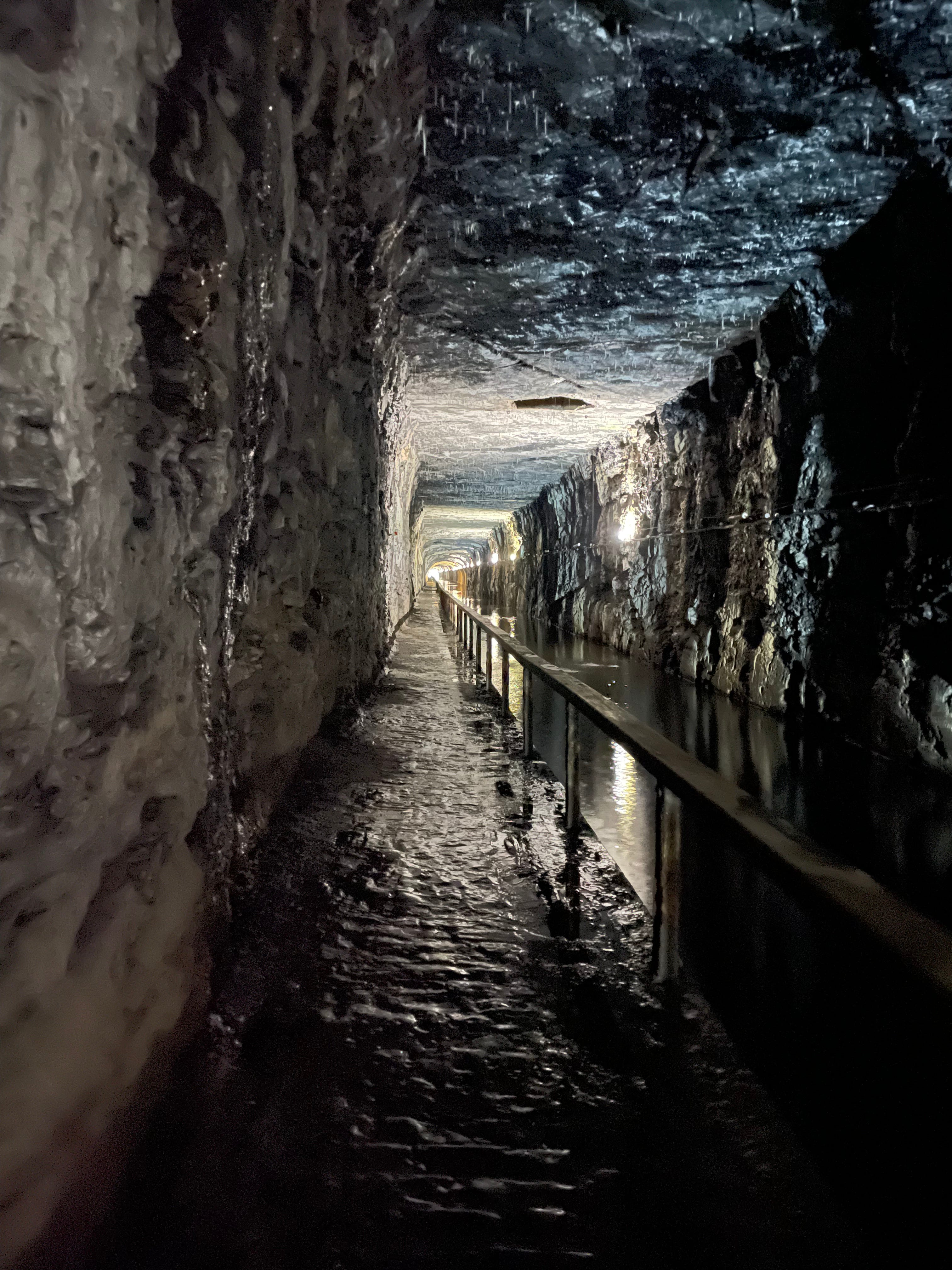
I walked through The Falkirk Tunnel on Tuesday for the first time, alongside a half mile stretch of the Union Canal adjacent to Falkirk High railway station. The temperature dips, and the path morphs to slippery cobble underfoot as you enter between mossy banks, drooping with ferns. I get an irresistible impulse to sing in such enclosed spaces, so I hear the chill of a long reverb too. The chatter of my walking companions behind me burbles and melds with the water that drips continuously from bedrock above. Stalactites cling to the ceiling, which is pockmarked by dark shafts. Voids.
It’s a wee bit little like entering a Dickens novel, or the movie set for Oliver. The water to my right, beyond a single iron railing, is inky and treacherous, and in places the light is so low that I don’t quite trust my own step. I slow down and keep my varifocal gaze on the light at the end of the tunnel, which turns out to be much further away than it looks.
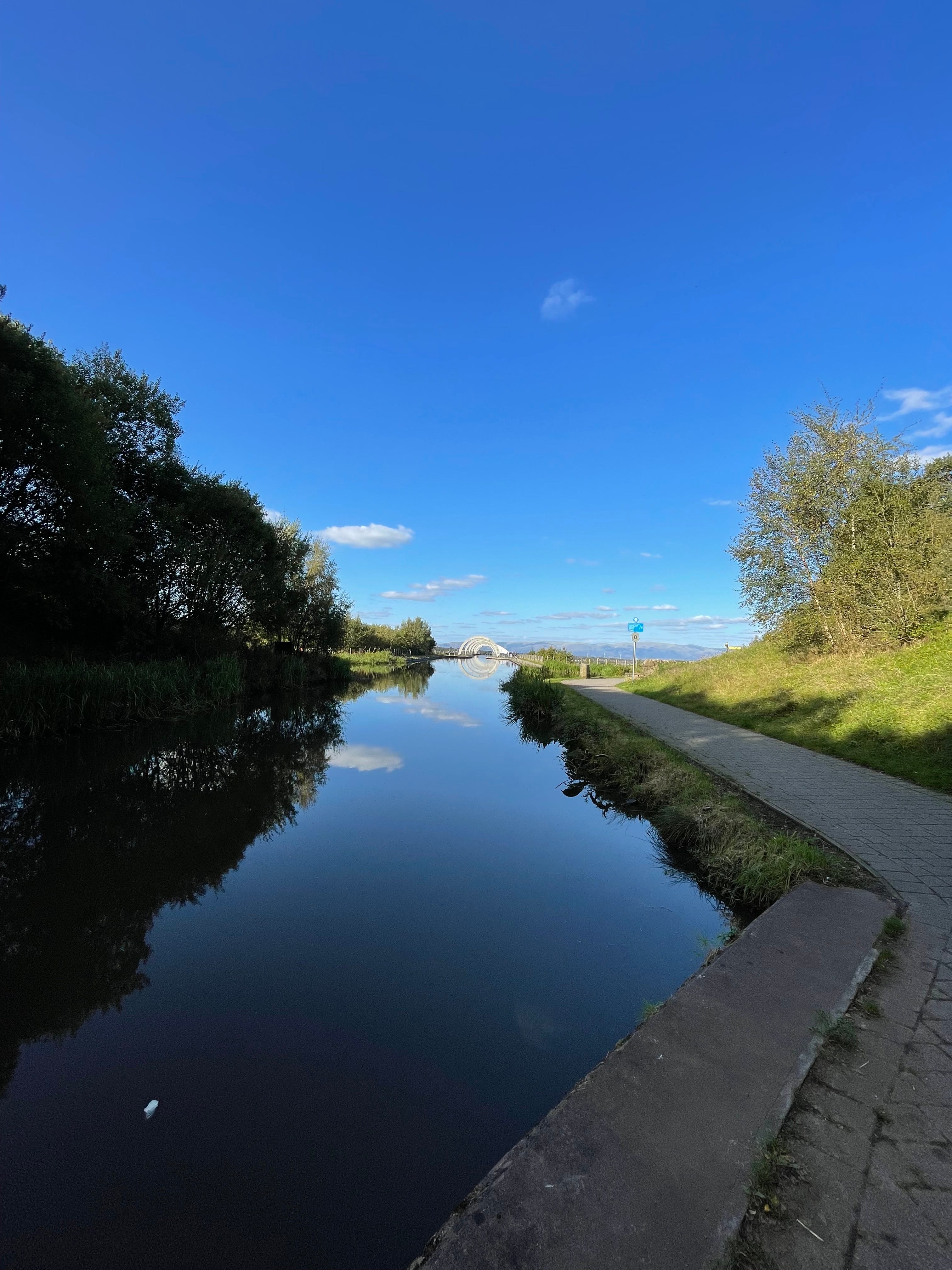
Union Canal westward to The Falkirk Wheel
The Union Canal was intended to connect Edinburgh and Glasgow, intersecting the existing Forth and Clyde Canal by means of a staircase of 11 locks at Camelon by Falkirk. Locks were an expensive business, so the Union Canal was otherwise conceived as a contour canal, following the lay of the land it traverses. Along its 31-mile route to Lochrin in the west end of our capital city, it takes in the navigable Avon Aqueduct too, with its dozen arches rising 86-feet above the river gorge below.
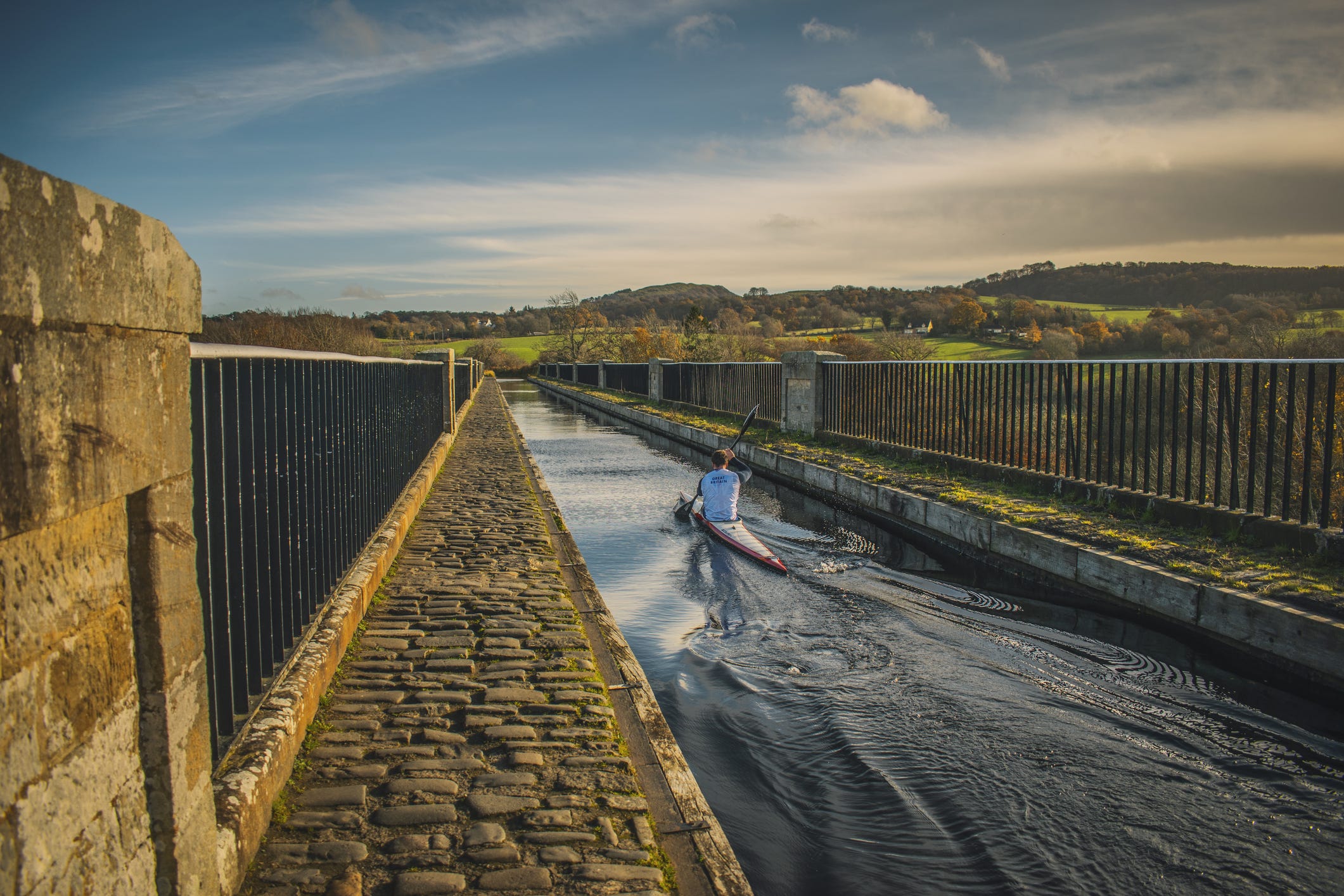
Avon Aqueduct, Union Canal[1]
The Falkirk Tunnel bears the marks of its construction, flitting between sections of meticulously engineered brickwork and channels rough gouged from limestone by means of explosives and the hand picking, scraping and shovelling of hundreds of ‘navvies’, Navigation workers, many of them much maligned Gaels from the Highlands or immigrant workers from Ireland. There are no definitive records of the many injuries sustained, and lives lost in the building of the Union Canal between 1818 and 1822, because those workers weren’t deemed important enough to merit numbers, let alone names.
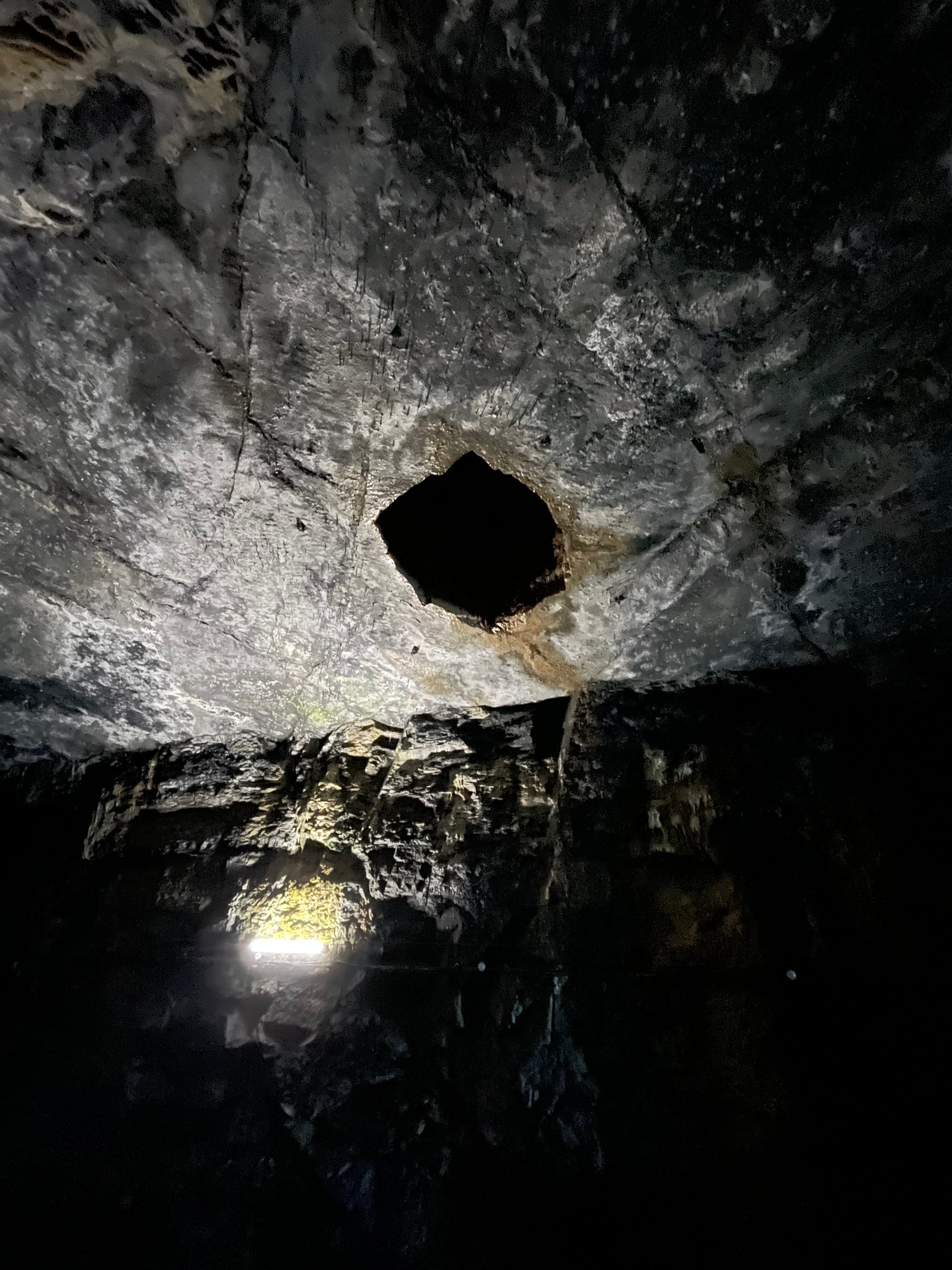
Dark shafts. Voids.
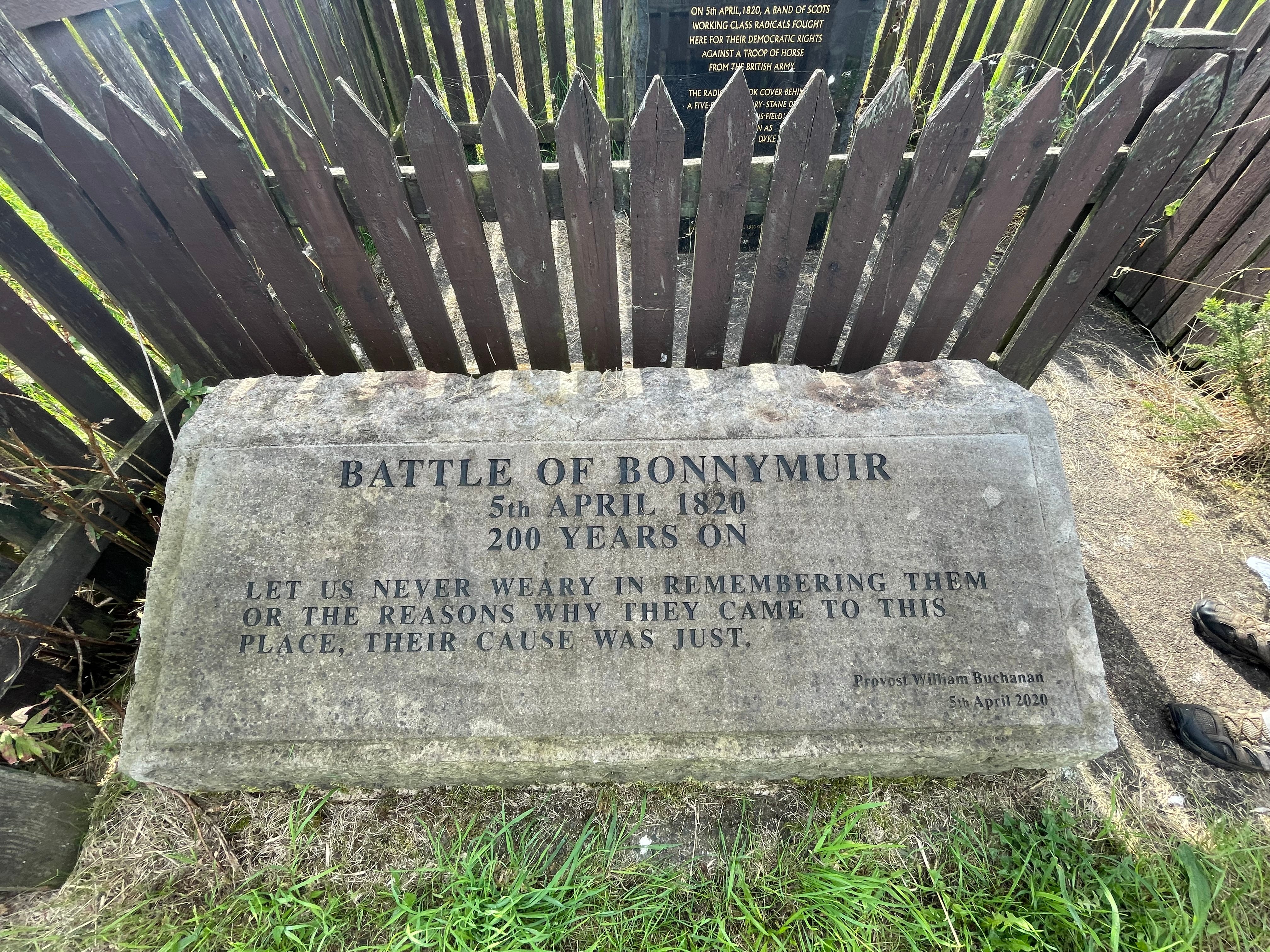
The navvies weren’t the only people rendered dispensable in central Scotland at that time. On the back road from Falkirk to High Bonnybridge, a mile west of the Union Canal, is a memorial marking the site of The Battle of Bonnymuir, a David and Goliath standoff during the Radical War of 1820. If you’ve never heard of the Radical War, also known as the Scottish Insurrection, nor had I, until I was invited in 2019 to co-design a participative, bicentenary project in collaboration with the Tolbooth Arts Centre in Stirling.
For historical context though, there’s a good chance you might have heard of the Peterloo Massacre in Manchester in 1819, when 18 people were killed and up to 700 injured as the Yeoman cavalry charged a crowd of 60,000 protestors agitating for parliamentary reform and electoral representation for working-class men.
The civic unrest that peaked at Peterloo had been building for decades, across the whole of the UK, following the egalitarian promise of the French Revolution, and the fracturing of social norms as the Industrial Revolution took hold. The long-running Napoleonic Wars, which ended in 1815, impoverished the nation, and to top it all off the eruption of Indonesia’s Mount Tambora in 1816 yielded what became known as The Year Without A Summer, a freak volcanic winter season of failed crops, famine and food riots precipitated by the state-sanctioned profiteering of the 1815 Corn Laws[2].
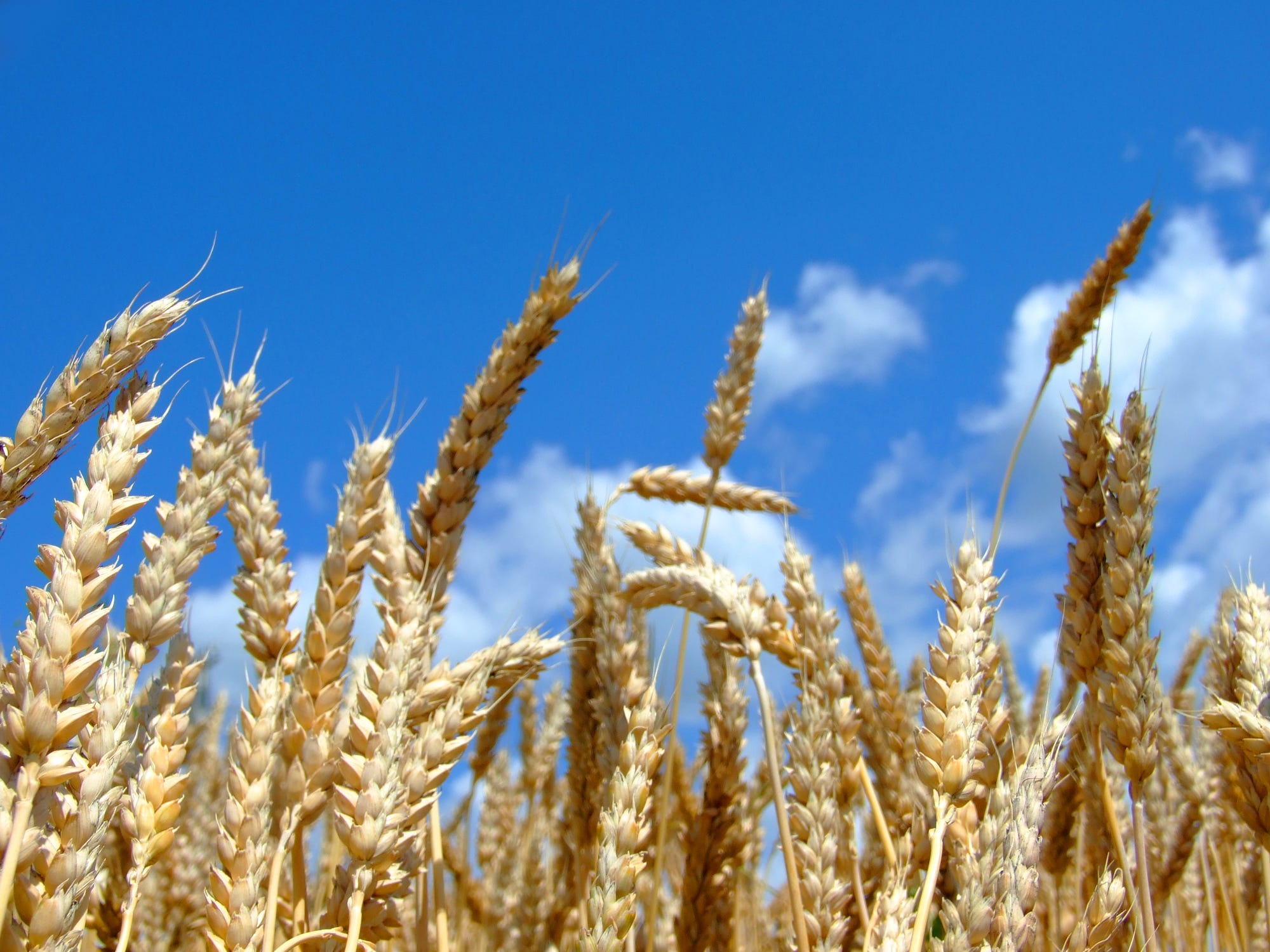
Corn referred to grain crops inc. wheat, oats and barley, rather than maize
In Scotland, as in England, communities of skilled artisan workers, especially cotton weavers and spinners, were fast becoming unemployed, as mills and factories mechanised production, slashed wages and created a pool of unskilled, disposable labour. In the industrial heartlands of England, between 1811 and 1816, this sparked the machine-wrecking movement known as The Luddites, even still a derogatory term for those who refuse to accept the necessity, and presumed benefits, of technological change. The Luddites were workers trying to protect their livelihoods and families, many of whom were executed or sent to overseas penal colonies as their insurrection was quashed.
On April 1st, 1820, against this backdrop, the Committee of Organisation for Forming a Provisional Government called for a national strike in Scotland. Its proclamation read:
Friends and Countrymen! Roused from that torpid state in which we have sunk for so many years, we are at length compelled from the extremity of our sufferings, and the contempt heaped upon our petitions for redress, to assert our rights at the hazard of our lives … we are not that lawless, sanguinary rabble which our oppressors would persuade the higher circles we are but a brave and generous people determined to be free.
Two days later, around 60,000 workers across central Scotland, mostly from weaving communities, stopped work. At the same time, a small band of around 30 armed men set out from Glasgow for the Carron Company Ironworks near Falkirk, intending to seize weapons there. They were led by weaver and former soldier, John Baird, and Andrew Hardie, both of whom were assured by informants that they would pick up additional recruits on the way. These promised recruits never materialised. It’s likely that their informants were agents provocateurs, acting on behalf of the UK Government, deliberately trying to flush out activists.
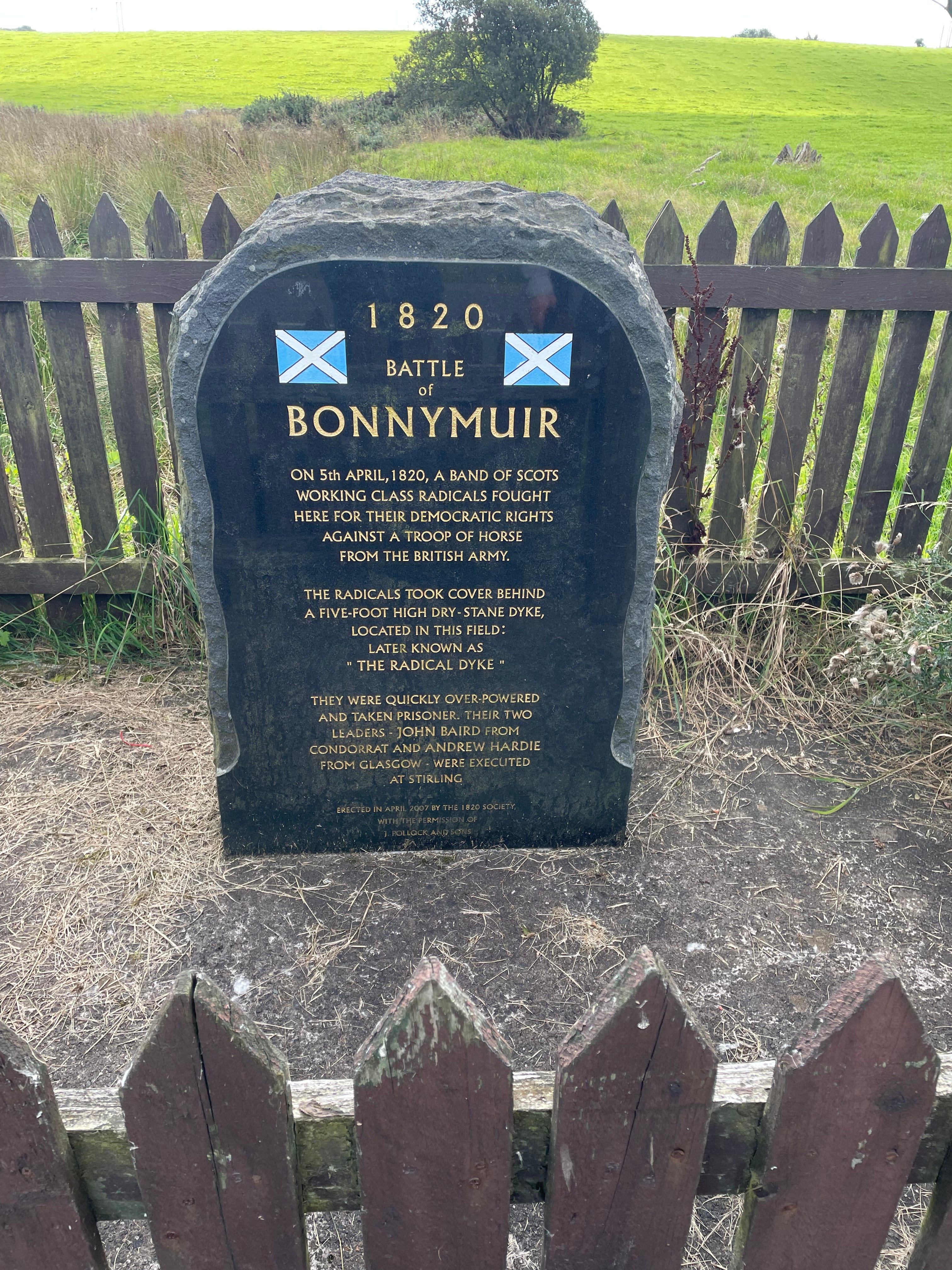
On April 4th at Bonnymuir, in behind what became known as The Radical Dyke (in Scots a ‘dyke’ is a wall), the small revolutionary troupe of weavers were overcome by Government forces and arrested for treason. John Baird and Andrew Hardie were executed early that autumn, before a crowd of 2000 huddled on Broad Street in Stirling, immediately outside what’s now the city’s Tolbooth Arts Centre. My intent (until COVID restrictions rendered it impossible) was to mark the bicentenary of their deaths with a massed procession of newly composed marching songs and street banners made by local school children and community groups, a sort of creative ‘riot’ in celebration of their egalitarian principles, before assembling at the Albert Halls in Stirling to remember the story of the Battle of Bonnymuir, and its political legacy.
The Radical War of 1820 failed in its immediate objectives but the week-long uprising, and the Peterloo Massacre before it, are part of a through line of social and political activism that gets us to where we are now. Would the Reform Act of 1832, bringing suffrage to middle class men, have passed without it? Or the 1918 Representation of the People Act which gave voting rights to all men? Or the 1928 Equal Franchise Act which extended to all women?
Just causes fail before they succeed.
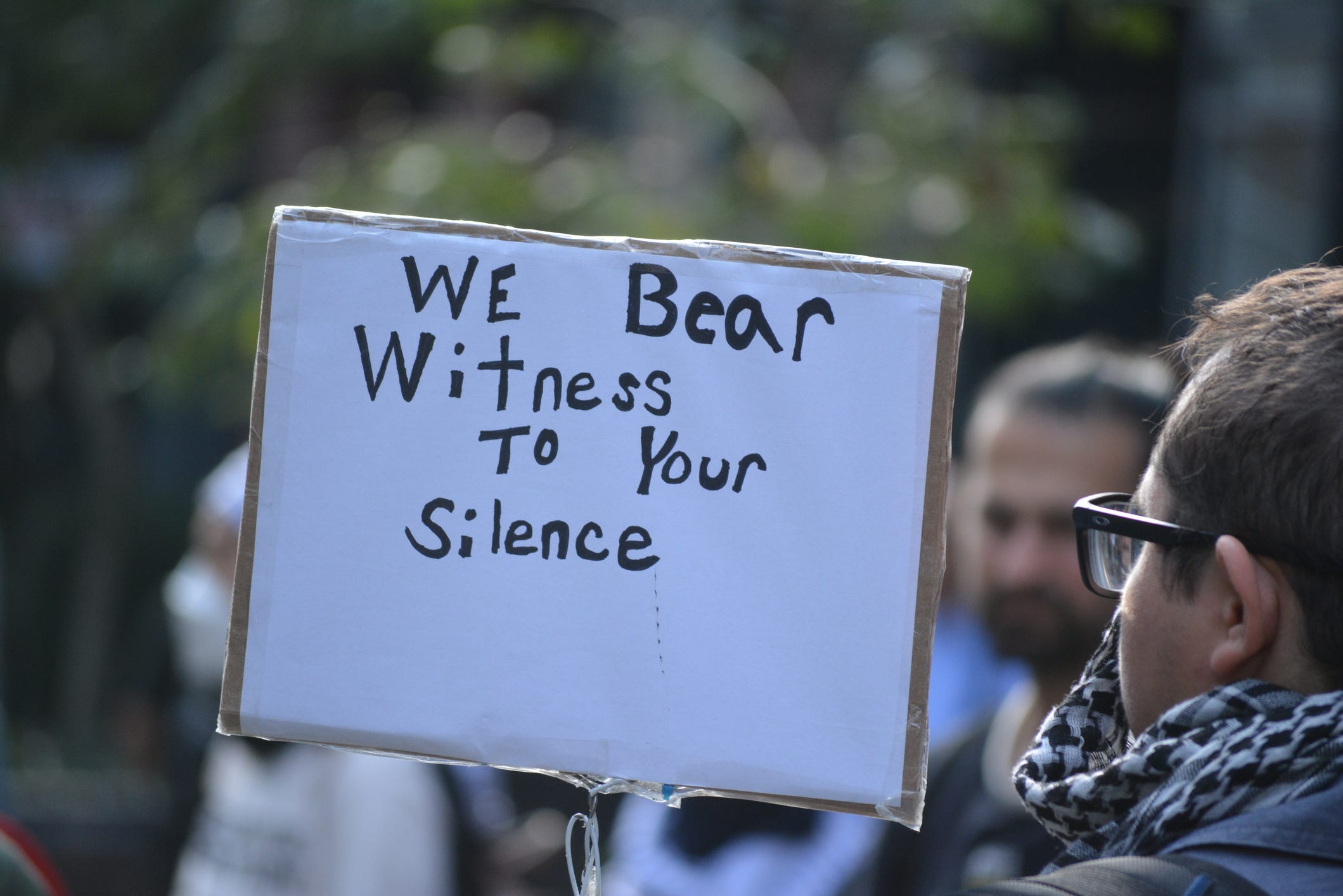
What crimes are people being arrested and imprisoned for now that point to the ethics of an alternate future, and criminal justice practices that history will judge abhorrent?[3] What is it that we don’t yet comprehend, that we’ll find ourselves fighting for and against, sooner than we realise?
Ill causes fail before they succeed too, of course. And some of the worst are just there in the wings, which puts a bit steel in my spine.
In amongst it all, AI is coming fast down the line for many of our jobs, and there’s little evidence that intensified automation and algorythmic outsourcing will benefit most of us. A Microsoft paper published this year[4] listing the Top 40 jobs most vulnerable to AI replacement, includes account clerks and mathematicians, customer service representatives and broadcasters, archivists and historians, writers and authors.
Call me a New Luddite[5].
Amongst the 40 jobs likely to be least impacted by AI are roofers and massage therapists, senior firefighters and nursing assistants, and - I kid you not - bridge keepers and canal lock tenders. I think of the navvies and their nameless fists and backs breaking through rock to carve the Falkirk Tunnel. And I whisper to my own kids: get good at working with your bodies, with your hands.
The sense of dispossession, dispensability and precarity that many people in post-industrial Scotland and the wider UK feel right now doesn’t seem unreasonable. Our economic system doesn’t care. And who would argue that our political systems are listening? It terrifies me that this widespread disenfranchisement is being played, deflected onto others even less fortunate, not least in Falkirk itself, where the Cladhan Hotel, housing asylum seekers, has become a national media flashpoint in recent months for both anti-immigration and anti-racism protests.
The language and gesture and increasingly spoken aloud dreams of fascism want facing in the street, absolutely. But maybe one of the many other kinds of facing looks a little more like listening too, and a little less like shouting?
And when will we take our collective eyes off ourselves, for the most part the contemporary equivalent of 19th century artisans and Navigation workers, and turn our gaze instead to the same technocratic, profiteering interests that drove the navvies’ bodies to breaking and let people starve in the name of corn tariffs?
It’s a low-lit, slippery path that we’re on, inky water right beside us, great voids above. Maybe there’s a light somewhere at the end, but my God if there is, it’s further than we think. And we’re not getting there without a fight.
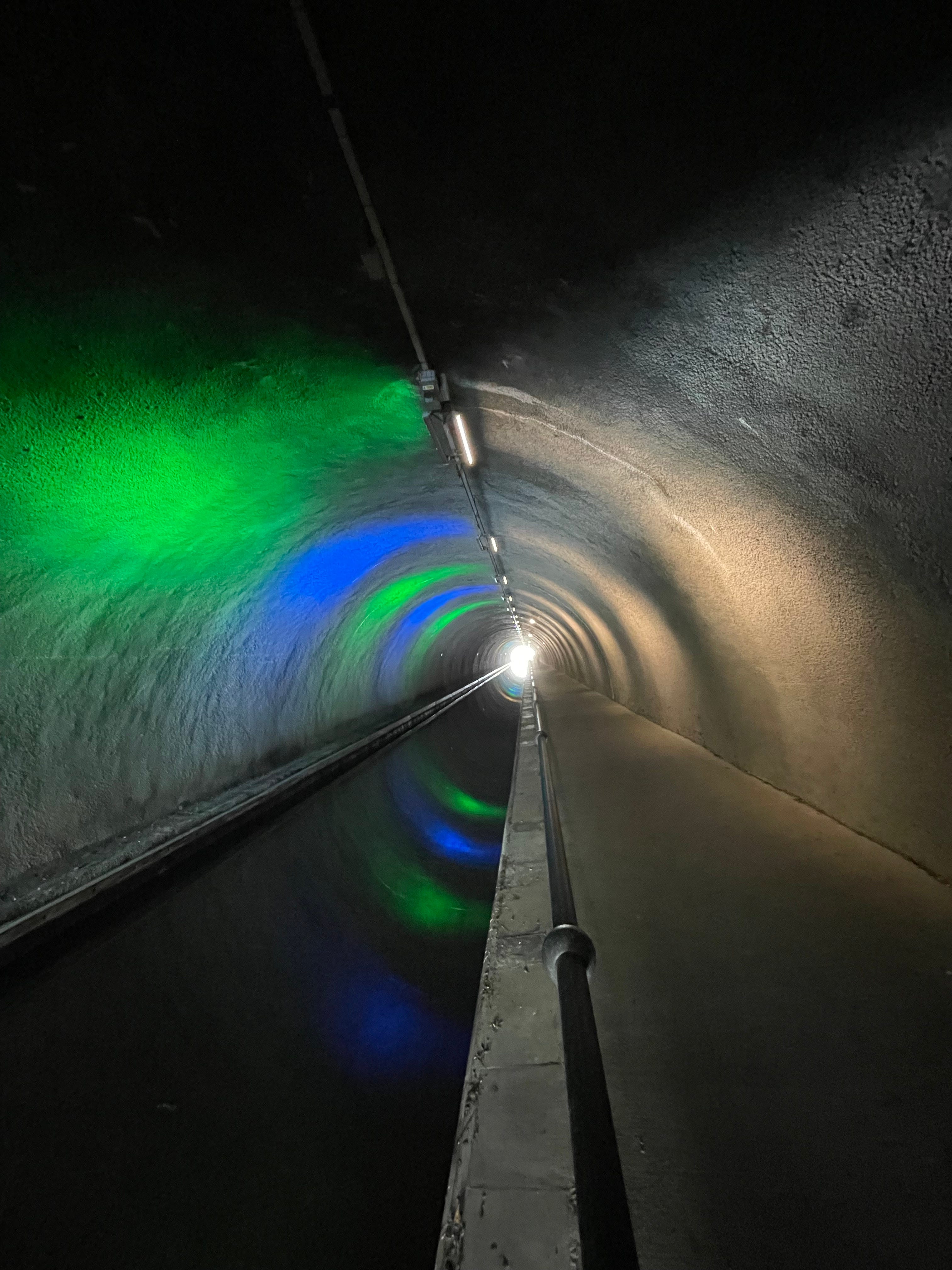
Roughcastle Tunnel, Union Canal
[1] Image ID 131513247 © Catalin Iliescu| Dreamstime.com
[2] The Corn Laws of 1815-46 imposed tariffs on cheap food imports to the UK to increase and secure profits for British landowners and farmers. They raised living costs hugely across the UK, leading to food shortages amongst the urban poor and widespread political unrest.
[3] There’s obviously an increasingly LONG list … image by ID 339678778 © Cpenler | Dreamstime.com
[4] https://www.windowscentral.com/artificial-intelligence/microsoft-reveals-40-jobs-about-to-be-destroyed-by-and-safe-from-ai
[5] In 2017, I received an unexpected invitation to speak at the opening session of the Scottish Futures Forum, at the Scottish Parliament, reflecting on how technology might shape society. In response, I brought three imagined news stories from 2030, including one featuring The New Luddites - A Digital Haven
a splendid piece of political activist writing. Fascism is lurking in the wings...and if ordinary people are seduced into emulating the behaviours of those who play with power and politics...if they accept the growth of private (purchased) power to a point where it becomes stronger than their democratic state itself, then it will arrive looking and talking like a saviour while all the time wanting more and more and more and taking it from you and me.
Hope lies in the fact that we are many and they are few - hope lies in factual accuracy and exposing the lie(s)...hope lies in standing together and looking after each other; it does not lie on erasing "the other" nor in those who seduce you with lies.
I’m up for the fight. As a writer who has just lost a contract to AI to write a travel guide to Scotland, it’s either that or retain to be a masseur. But something tells me AI content is the CD Rom of the future, and will be seen as the soulless junk it is- not before so much talent and potential has been sacrificed at the altar of corporate greed and shorttermism.